
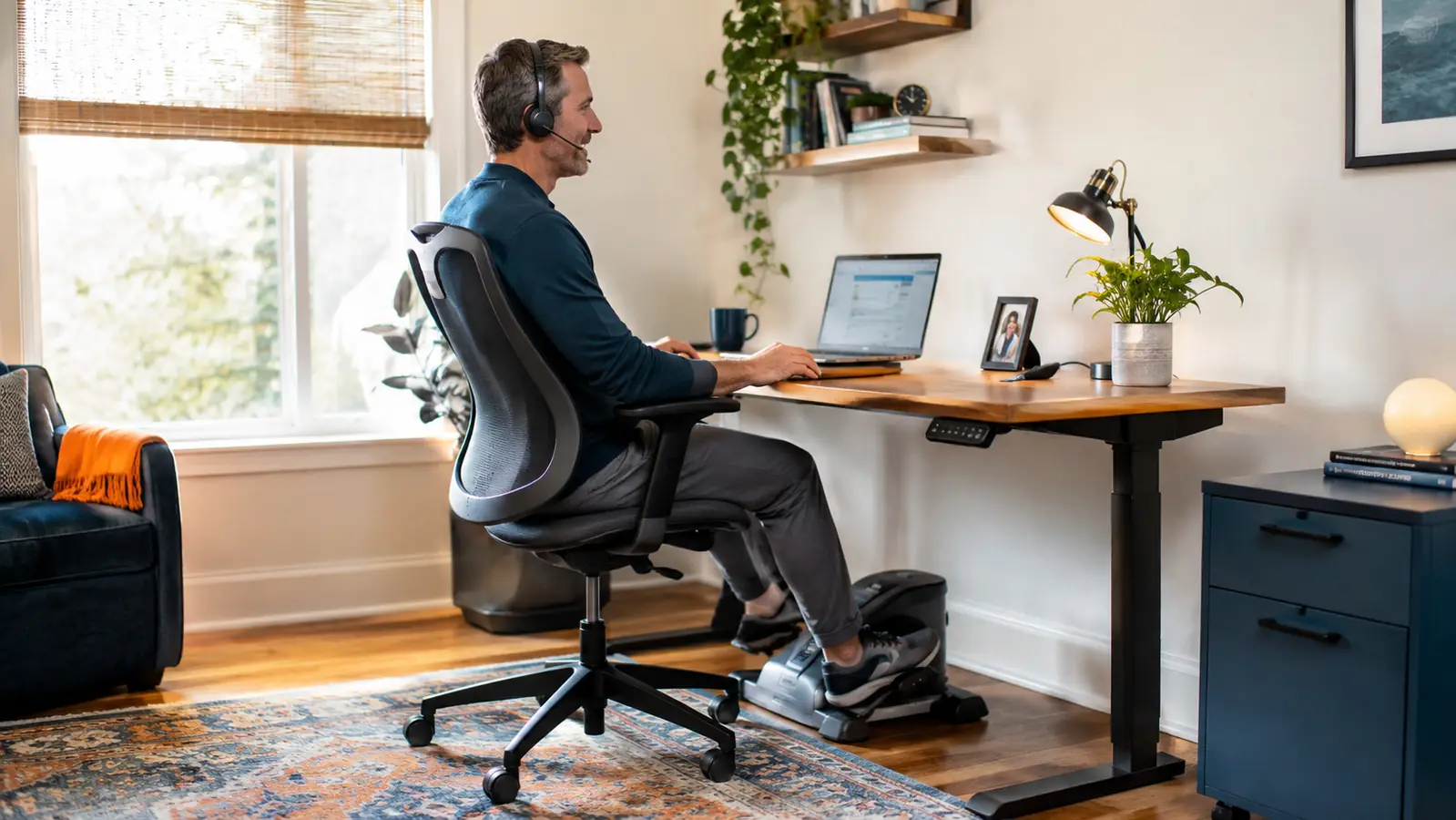
If you have a desk job, movement doesn't happen by accident. Nobody schedules a walk into a 9 AM stand-up, and by the time you look up from your third video call, four hours have passed without you leaving your chair. The fixes most people reach for, standing desks, walking pads, hourly reminders to get up, all require you to actually stop what you're doing. That's the part that fails within a couple of weeks. A pedal exerciser like the himaly Mini Exercise Bike solves a different problem: it lets you move while you're still working, not instead of it.
This guide isn't a sales pitch dressed up as advice. It's the actual sequence I'd walk someone through if they told me they wanted to stay active at their desk without blowing up their calendar or their focus. Five steps, in order, starting with figuring out when you'll realistically use the thing before you even plug it in.
You don't need a treadmill desk, a walking pad, or an expensive standing desk conversion to start. A pedal exerciser costs less than most desk accessories, takes up less floor space than a trash can, and doesn't require you to change a single thing about how your calls or your workflow already run. That's the whole appeal of it.
Your Chair Doesn't Have to Be the Enemy
The himaly Under Desk Bike Pedal Exerciser fits under almost any desk and gives you a place to put the movement your calendar keeps stealing from you.
Amazon Check Today's Price on Amazon →Step 1: Map Your Actual Movement Windows
Before you set anything up, figure out where in your day you have hands-free stretches. For most desk jobs that's audio-only calls, reading-heavy tasks, and the twenty minutes after lunch when your brain is foggy and your typing is sloppy anyway. Write down three of these windows from your actual calendar this week, not a hypothetical ideal week.
This matters because the biggest reason under-desk pedal exercisers end up in a closet within a month is that people buy one, put it under the desk, and expect motivation to show up on its own. It won't. You need a trigger, a specific recurring block where pedaling is the default, not an afterthought.
If you're on camera for most of your calls, don't fight that. Save the pedaling for your audio-only meetings, your solo deep-work blocks where you're reading rather than typing, and any recurring call where you're mostly listening. That's usually more time than people expect once they actually look.
Be honest about which calls are truly audio-only versus which ones you're technically allowed to have the camera off for but everyone notices anyway. There's a difference between a status update nobody's watching your screen during and a client pitch where you need to be dialed in and visible. Pick the windows where pedaling genuinely won't distract you or anyone else, and don't force it into meetings where you need full attention on the conversation.
One more thing worth doing before you move to Step 2: check how many of these windows actually exist on a normal Tuesday versus a light Friday. Most desk jobs have at least ninety minutes a day that qualify once you count everything, a training webinar you're half-watching, a long email thread you're reading through, the block right after your last meeting when you're winding down instead of starting something new. You're not manufacturing free time here. You're noticing time that already exists but currently gets spent completely still.
Step 2: Get the Height and Position Right Before You Judge It
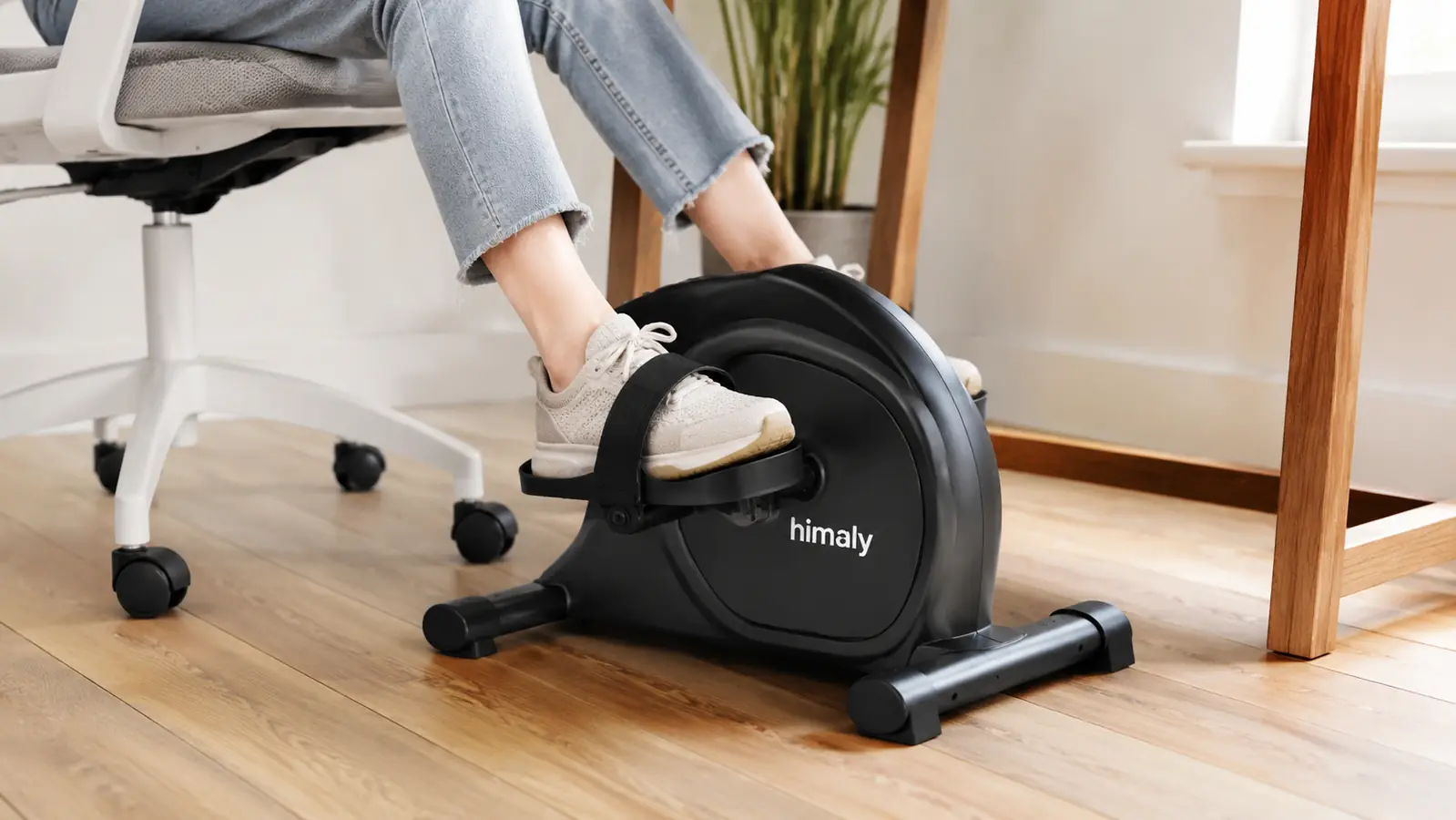
Most complaints about pedal exercisers come down to setup, not the product. Your chair height and desk clearance both matter. Sit the way you normally would, then slide the pedal exerciser under your desk until your knees hold a comfortable angle at the bottom of the pedal stroke, not locked out straight and not cramped up near your chest.
The himaly unit sits low to the ground, which helps with desks that don't have a lot of clearance, but you still need at least a few inches of gap between the top of the device and the underside of your desk drawer or crossbar. Measure that before you order anything larger, and if you already own one, measure it now instead of guessing why it feels awkward.
Give it one real session at the correct height before deciding whether it works for you. A lot of people judge a pedal exerciser during the first five wobbly minutes when their form is off, not after they've actually dialed in the position.
Also pay attention to noise. Under-desk pedal exercisers are generally quiet, but if you're on a sensitive microphone during calls, do a quick test with your mic muted versus unmuted to see how much, if any, sound carries through. Most people find it's a non-issue once they're seated properly with even pedal strokes instead of jerky ones, but it's worth five minutes of testing before you build a whole routine around a device that turns out to be distracting to people on the other end of your calls.
Step 3: Start With Low Resistance and Short, Boring Sessions
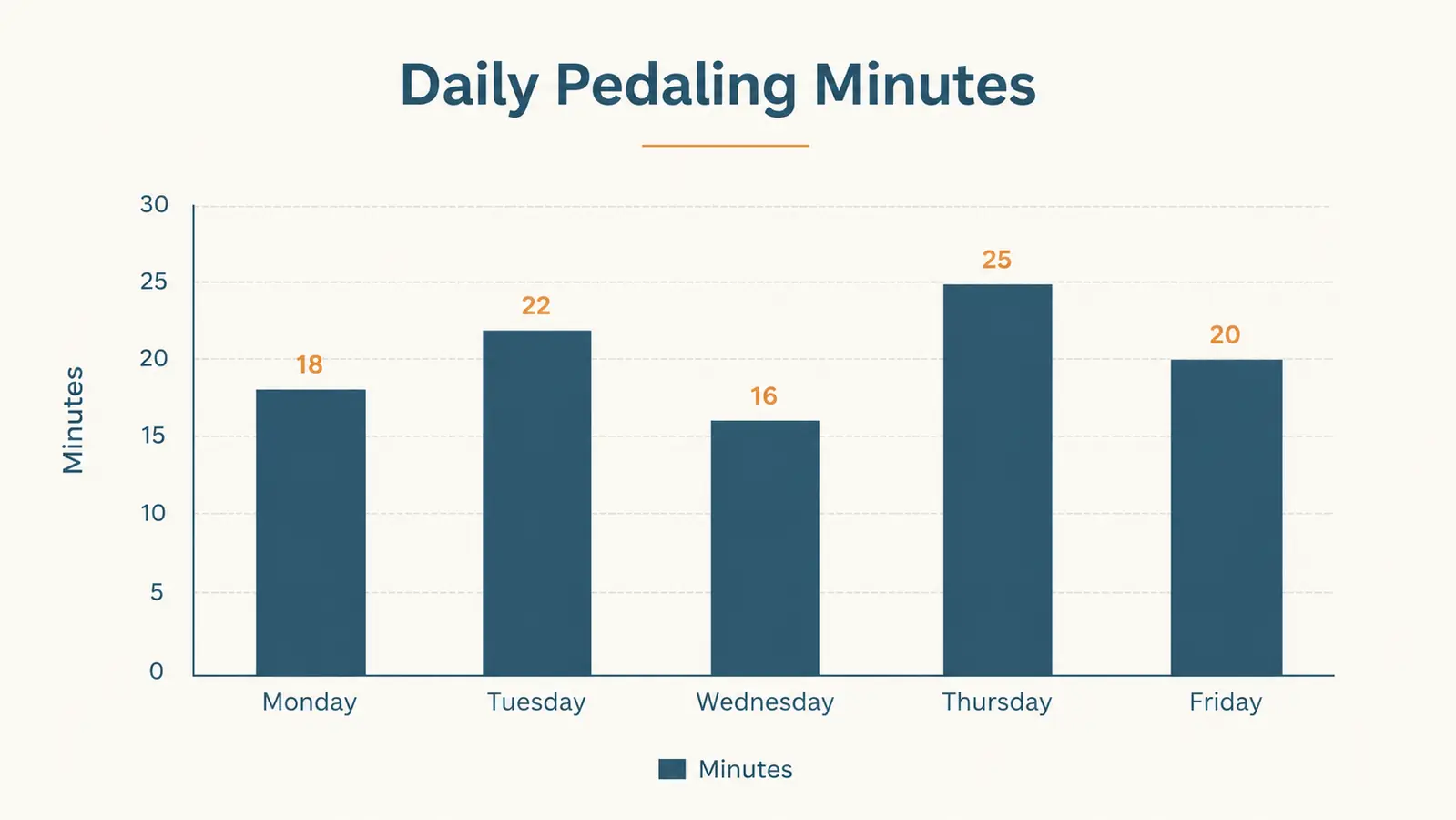
The instinct is to crank the resistance knob and pedal like you're training for something. Don't. The goal here isn't a workout, it's non-exercise movement stacked into a day that would otherwise have none. Set the resistance low enough that you can pedal for fifteen to twenty minutes without your heart rate climbing enough to change your voice on a call.
Start with two sessions a day, roughly ten to fifteen minutes each, tied to the movement windows you identified in Step 1. That's it. Not an hour. Not high resistance. The LCD screen on the himaly tracks time, rotations, and estimated calories, which is useful for noticing patterns, but it's not a scoreboard you need to beat every day.
If you go too hard in week one, you'll associate the pedal exerciser with fatigue and stop using it. Undershoot on effort for the first two weeks. You can always turn the resistance up once it's a habit instead of a chore.
It also helps to separate exercise from movement in your head. This isn't cardio day. Nobody's measuring your fitness off a desk pedal exerciser. The entire value proposition is trading stillness for gentle, steady movement during hours you'd otherwise spend completely motionless. Keep that expectation in place and the low resistance setting will feel like plenty rather than a letdown.
Resistance level also depends on your desk setup, not just your fitness. If your desk is on the lower side and your knees are already close to the underside, drop the resistance further so you're not fighting the machine and your furniture at the same time. Comfort beats effort in these first couple of weeks. You're establishing a pattern your body doesn't resent, and a pattern you resent gets abandoned no matter how good it is for you on paper.

Step 4: Attach It to Something You Already Do
Habits stick when they're attached to an existing behavior, not floating on their own. Pick one recurring thing on your calendar, your Monday team call, your daily email triage block, your after-lunch slump, and make the pedal exerciser automatic during that specific thing. Not sometime today. That specific thing.
Put the pedal exerciser somewhere you'll see it, not tucked all the way back against the wall where you forget it exists. If it's visible under your desk when you sit down, you're more likely to use it than if retrieving it becomes its own small task.
After about two weeks of pairing pedaling with the same trigger, most people stop thinking about it and just start doing it when that call starts. That's the actual goal, movement that doesn't require a decision each time.
Tell a coworker or your partner what you're doing, even briefly. Saying it out loud, I pedal during my Monday call block, makes the habit slightly more real and gives you a small amount of accountability without turning it into a whole announcement. It doesn't need to be a big deal. It just needs to exist somewhere outside your own head.
Step 5: Track Consistency, Not Intensity
Once it's part of your routine, the metric that matters is how many days you used it, not how hard you pedaled on any single day. Four short, easy sessions a week beats one intense session followed by two weeks of avoidance.
Use the LCD readout to notice trends over time, total rotations for the week, roughly how many days you hit your target, not to chase a personal record. If a week goes sideways and you miss a few days, restart at the same easy resistance you started with. Don't punish yourself back into it with a harder session, that's how people quit for good.
Revisit your movement windows every month or so. Your calendar changes, meetings shift, and the audio-only call you built your habit around might turn into a video call next quarter. Adjust the trigger, don't abandon the habit.
If you're the kind of person who likes data, jot down your weekly totals somewhere simple, a notes app, a sticky note, whatever works. You're not building a spreadsheet empire, just giving yourself a quick way to notice if you've quietly stopped using it for two weeks so you can restart before it becomes a fully abandoned habit.
It's also worth checking in with how you feel by the end of the day, not just what the LCD screen says. Are your legs less stiff after a long stretch at your desk. Is the mid-afternoon crash showing up a little later than it used to. Those are the real signals that the habit is paying off, and they matter more than any single number the device reports back to you.
What Else Helps
A pedal exerciser handles the leg movement problem, but it's not the whole picture. Get up and actually stand for a minute or two once an hour if you can, even just to refill water or stretch your shoulders. Check your monitor height and chair support while you're at it, since slouched posture undoes a lot of the benefit of moving your legs if your neck and back are still taking a beating all day.
Hydration is an easy one to forget when you're trying to sit still and focus. Keep water within reach at your desk. Standing up to refill it is itself a small win, and staying hydrated helps with the afternoon energy dip that makes people reach for a fourth coffee instead of a five-minute walk.
If your job keeps you on calls most of the day, a decent pair of over-ear headphones changes how tolerable that actually is, and reduces the fatigue that makes people skip their movement windows altogether because they're too drained to bother. Comfort compounds. A desk setup where your ears, your back, and your legs are all being taken care of at the same time is a setup you'll actually stick with past the first month.
None of these habits need to be perfect or permanent. The goal is a desk setup that makes movement the path of least resistance instead of something you have to consciously fight for. A pedal exerciser under your feet, a chair that supports your back, a reason to stand up once an hour. Stack enough small things and the day looks different by Friday even if no single change felt dramatic on Monday.
The best desk habit is the one you don't have to think about twice.
Stop Waiting for a Reason to Move
The himaly Under Desk Bike Pedal Exerciser fits under your existing setup and works with the schedule you already have, not against it.
Amazon Check Today's Price on Amazon →