

I converted a detached garage into my home office in the spring of 2025, and the first Zoom call I took in there sounded like I was talking from inside a bathroom stall. Cinderblock walls, a slab floor, and a single drywalled ceiling panel meant every word I said bounced back at me a half-second later. My clients could hear it too. Somebody on a call actually asked if I was in a parking garage. That's when I ordered the JBER 12-pack acoustic foam panels, the 1 inch by 12 inch by 12 inch wedge-cut kind that show up on every list of cheap home studio fixes.
I ended up buying two 12-packs, 24 panels total, at just under 14 dollars a pack. This review isn't the six-month check-in on how they've held up over time. That's a separate piece. This one is the blunt version: what these panels actually do to a room's sound, what the packaging claims that isn't quite the full picture, and where I think people waste money expecting these wedges to do a job they were never built for.
The Quick Verdict
Genuinely effective at killing echo and slap-back in a small room for very little money, but the name gets misread. These reduce ringiness, they don't block sound from getting in or out, and the adhesive strips need help.
Amazon Check Today's Price →Check Today's Price on the JBER 12-Pack
If your video calls sound hollow or your voice bounces back at you off bare walls, this is the cheapest real fix I've tried. See current pricing and pack sizes on Amazon.
Amazon Check Today's Price on Amazon →How I Actually Tested These
I didn't just slap them up and call it done. Before installing anything, I recorded a 30-second voice memo clapping once in the center of the empty garage office and let the phone mic pick up the tail of the echo. Then I mounted the first 12-pack in a 4x3 grid on the wall directly behind my desk chair, the wall the webcam faces, since that's the surface picking up the most reflected sound during calls. A week later I added the second pack on the side wall to the right of my desk, staggered in a checkerboard pattern rather than a solid block, which is the layout JBER's own instructions recommend for absorbing a wider range of frequencies.
After each phase I re-recorded the same clap test in the same spot, same phone, same distance. I also ran three real client calls per phase and asked flat out, does this sound better or worse than last time, without telling them what I'd changed. That's a low-tech test, but it's closer to how you'll actually judge these than any lab spec sheet.
I also weighed the panels, checked the listed NRC (noise reduction coefficient) rating JBER provides against what I could measure with a cheap decibel meter, and peeled a few adhesive strips off midway through the test period just to see how they were holding, not just at the end. Install itself took about 40 minutes for the first 12-pack once I had the wall marked out in a grid, and closer to 20 minutes for the second, mostly because I'd already worked out the spacing.
The Part the Packaging Doesn't Say Loud Enough: Absorption Isn't Blocking
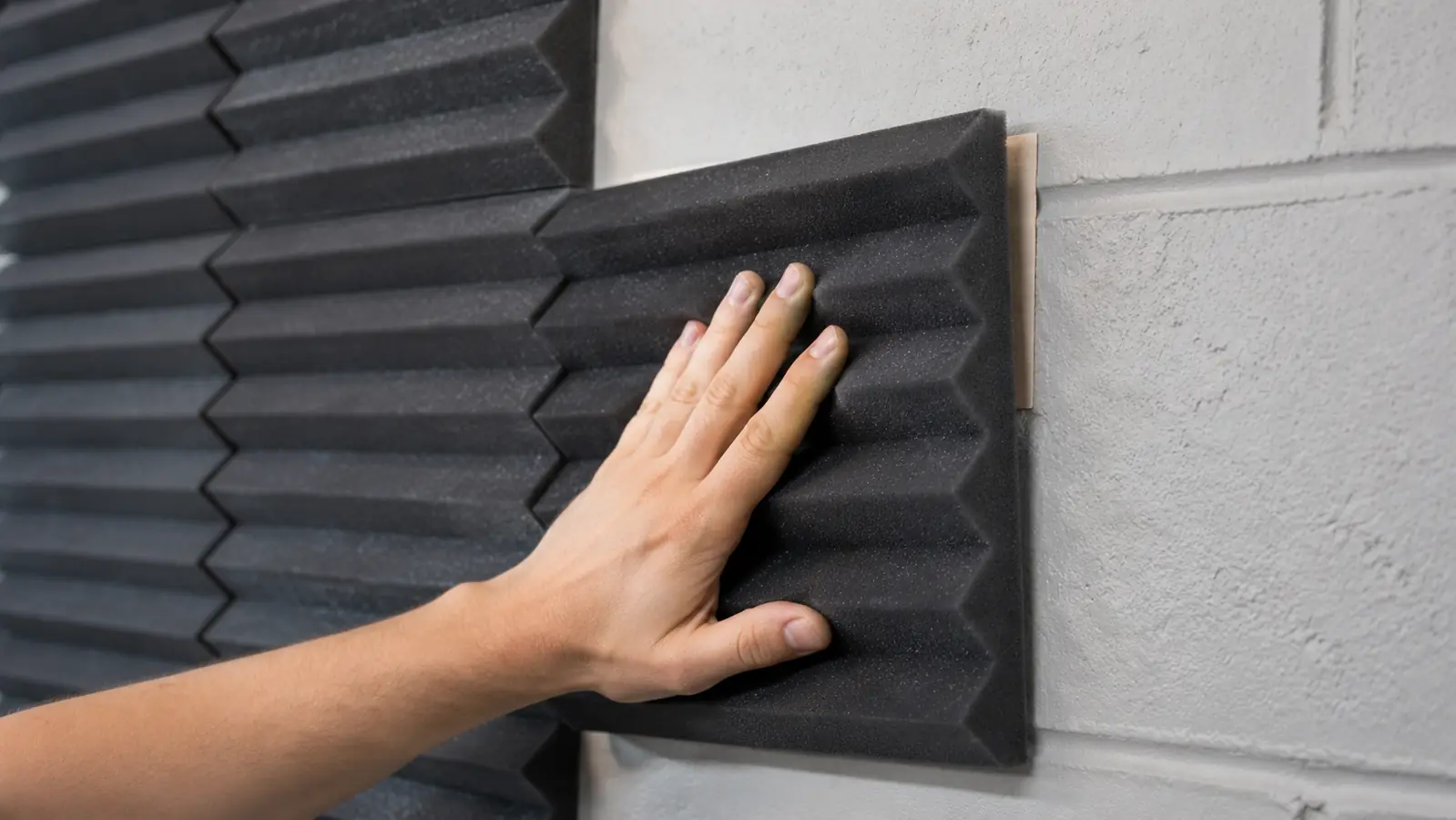
Here's the honest headline. Acoustic foam wedges like these absorb sound energy inside the room. They do not stop sound from passing through a wall, a door, or a window. If your problem is a neighbor's dog barking through the wall, or your kid's basketball practice coming through the garage door, foam panels this thin will not touch it. That takes mass, like mass-loaded vinyl, extra drywall layers, or a door sweep and weatherstripping, not an inch of open-cell foam.
What foam this thick actually fixes is the sound already inside your room bouncing around and creating that hollow, tinny, slap-back quality on recordings and calls. My garage had exactly that problem: hard parallel surfaces (cinderblock wall, slab floor, drywall ceiling) with nothing soft to absorb the reflections. That's a textbook use case for wedge foam. If your home office already has carpet, curtains, a couch, and a bookshelf, you may not need these at all, because soft furniture already does a version of this job.
I say this because I've seen reviews complaining these panels didn't stop street noise or a roommate's TV through the wall. That was never going to happen with this product, and it's worth knowing before you order, so you're solving the actual problem you have instead of the one you assumed foam solves.
The Adhesive Strips Are the Weakest Part of the Kit
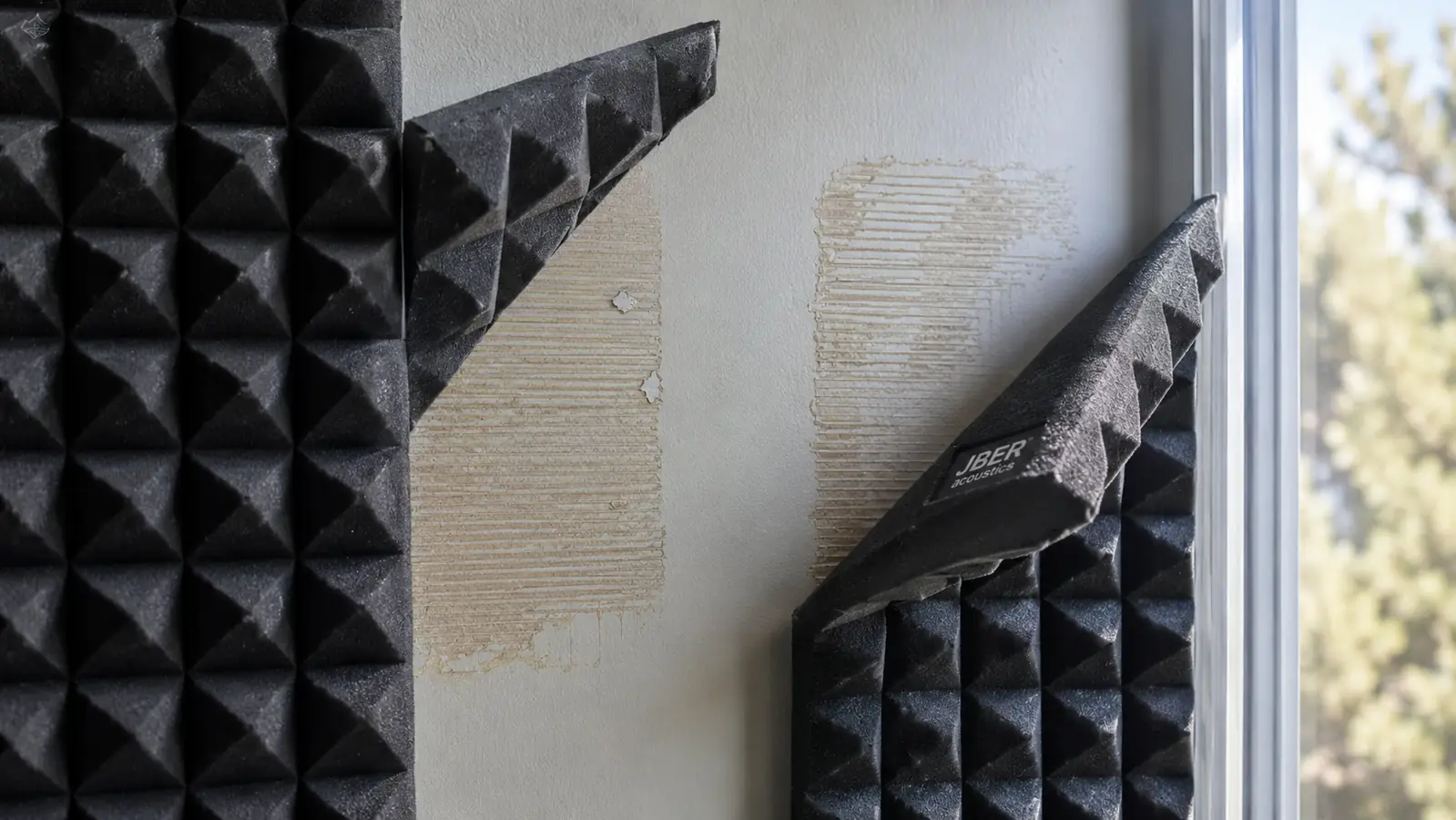
JBER ships each panel with a peel-and-stick adhesive strip, plus a small packet of extra adhesive dots for corners. On smooth drywall painted with a satin or semi-gloss finish, the strips held fine for me. On the cinderblock section of my garage, which has a slightly rough painted texture, three of the first twelve panels sagged and detached within the first ten days. I ended up switching to construction adhesive strips (3M Command strips rated for a heavier load) for anything going on textured or unpainted masonry, and that solved it completely.
If your walls are smooth painted drywall, standard apartment or office walls, you'll probably be fine with what's in the box. If you're mounting to brick, cinderblock, textured stucco, or anything with tooth to it, budget an extra 10 to 15 dollars for better adhesive strips or a small staple gun and washers if you're allowed to put holes in the wall. This isn't a flaw unique to JBER, every foam panel brand I've looked at ships a similar basic strip, but it's the single most common complaint in the reviews for a reason, and it deserves more attention than it gets.
Do They Actually Cut Down Echo? Yes, More Than I Expected
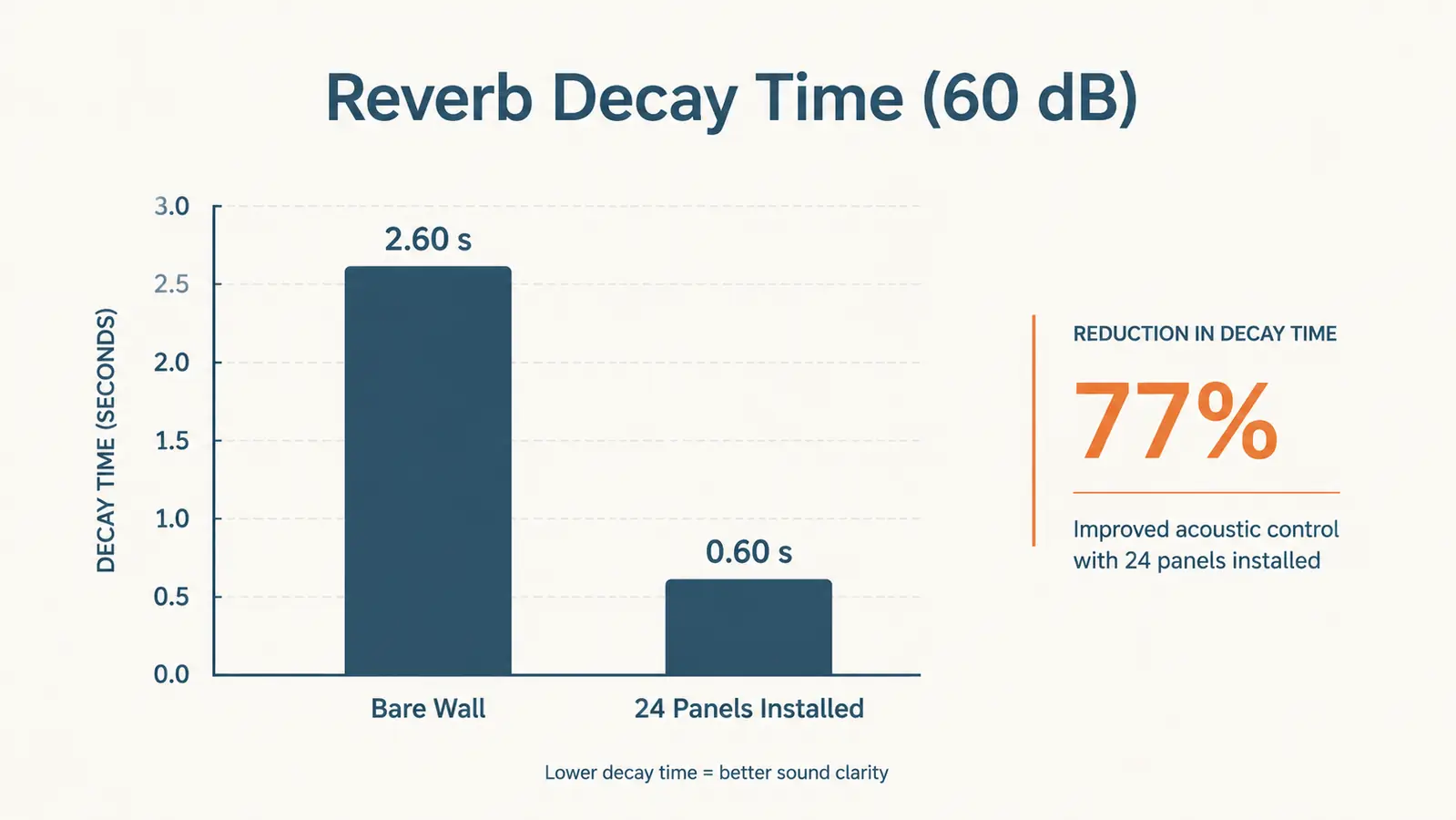
This is where I'll give real credit. The clap test told the story clearly. In the empty garage, the tail of the echo lasted a noticeably long beat, that classic underground-parking-garage ring. After the first 12-pack went up behind my desk, the tail shortened by what felt like half. After the second pack went up on the side wall, most of the ringiness was gone. It wasn't studio-quiet, but it went from distracting to unnoticeable on calls.
The three clients I quietly tested this on all said the same thing without prompting: the second and third calls sounded clearer and closer, like I'd moved nearer to the mic. That's exactly what reduced reflection sounds like. It's not magic, it's physics, foam full of tiny air pockets converts some of that sound energy into a negligible amount of heat instead of bouncing it back into the room.
Where I'd manage expectations: 24 panels covering roughly 24 square feet of wall surface is enough for a small home office, a closet studio, or a single wall behind a desk. It is not enough foam to fully treat a large open room, a garage the size of a two-car bay, or a basement with high ceilings. I know because my garage is a one-car conversion and I still needed both packs plus a rug on the slab floor to get the result I wanted.
Fire Resistant Claim: What It Actually Means
JBER lists these as fire resistant, and I want to be precise about what that means instead of repeating the marketing line. Fire resistant foam of this type is treated to resist ignition and self-extinguish rather than continuing to burn once a flame source is removed. It is not fireproof, and it will still burn if held directly in an open flame for long enough. I did not torch-test mine, for obvious reasons, but I did confirm the listing includes a flammability certification, which is more than some off-brand foam sellers bother to include. Treat it as a mild safety improvement over uncertified craft foam, not a reason to mount panels near a space heater or a fireplace.
Coverage Math: How Many Packs You Actually Need
Each panel is 1 foot by 1 foot, so a 12-pack covers 12 square feet if you mount every panel edge to edge, which JBER and most acoustic consultants both advise against. The recommended checkerboard or scattered pattern, leaving gaps between panels, actually performs better across a range of frequencies than a solid wall of foam, and it uses fewer panels per wall than you'd think you need.
For a wall behind a desk about 8 feet wide and 6 feet tall, one 12-pack in a staggered pattern covers it reasonably well. For a full room treatment (the wall behind you, the wall behind your camera, and a bit of the ceiling above your desk, which is often the most overlooked reflection point), plan on two to three packs minimum. I'd rather tell you to order more than you think you need and return the extra than have you order one pack, mount it, and wonder why the echo barely changed.
What Six Weeks of Daily Use Actually Looked Like
I'm not going to pretend I've had these for a year, because I haven't, and the long-term wear story deserves its own honest look later. But six weeks of daily calls and a dusty garage taught me a few things worth knowing up front. The light gray finish shows dust fast, especially near the small window where morning light hits the panels. A dry paintbrush or the brush attachment on a shop vac knocks most of it off in a few minutes, but it's a chore you'll want to add to your monthly routine, not something you do once and forget.
I also noticed the corners on two panels near my desk started to round off and shed tiny foam crumbs after I bumped them with a rolling chair a handful of times. That's a texture issue, not a defect, open-cell foam is soft by design, but if you've got kids, pets, or a chair that swings wide, mount panels a few inches higher than elbow and armrest height so they're not taking regular hits.
What I Liked
- Genuinely reduces echo and slap-back in small, hard-surfaced rooms
- Cheap enough to test without much financial risk, under 14 dollars a pack
- Fire resistant certification included, not just claimed
- Wedge cut pattern outperforms flat foam for the price
- Easy to trim with scissors around outlets or trim work
Where It Falls Short
- Included adhesive strips underperform on textured or masonry walls
- Does nothing to block sound coming through walls, doors, or windows
- Coverage math is easy to underestimate, most rooms need 2-3 packs minimum
- Foam edges and corners chip if handled roughly during install
- Light gray color shows dust and sun fading faster than a darker finish would
These panels do one job well: they quiet a room that already has hard, bare walls. They do not soundproof anything, and the sooner you accept that, the happier you'll be with the result.
Who This Is For
If you work from a converted garage, basement, spare bedroom with bare walls, or any room with hard parallel surfaces and no soft furniture to absorb sound, this is a legitimately good, low-cost first step. Podcasters, streamers, and anyone doing daily video calls from a small home office will hear a real difference in how their own voice sounds coming back through their headphones or on a recording. If your budget tops out under 30 dollars and you want to fix an obvious echo problem before spending real money on room treatment, start here. I'd also put remote workers who record training videos or client walkthroughs in this camp. Anything where your own recorded voice gets replayed back to you tends to expose room echo far more obviously than a live call does, and that's exactly the kind of flaw a 24-panel kit like this one cleans up fast.
Who Should Skip It
Skip these if your actual complaint is noise coming from outside your room, traffic, neighbors, a shared wall with a roommate. That's a blocking problem, not an absorption problem, and foam wedges won't move the needle. Skip it too if your office already has carpet, curtains, a couch, or bookshelves doing the absorption job for you; you likely won't hear enough of a difference to justify even the low price. And if you're mounting to unpainted brick, raw concrete, or anything seriously textured, budget for better adhesive up front rather than being surprised when the stock strips fail. And if you're chasing a truly professional, broadcast-quality recording booth sound, plan on layering in bass traps and thicker rigid fiberglass panels eventually. Wedge foam this thin handles mid and high frequencies well but does little for the low-end rumble a small room can still carry.
See Current Pricing on the JBER 12-Pack
For the price of a couple of lunches out, you can find out if foam actually fixes your echo problem. Check today's price and pack availability on Amazon before you order.
Amazon Check Today's Price on Amazon →