

You're three minutes into a call that actually matters when the dog loses it at a delivery truck, or a kid starts arguing with a sibling two rooms over, or your upstairs neighbor decides that's the moment to rearrange furniture. None of that is something you can schedule around. Households don't run on your meeting calendar, and pretending they will just sets you up to get caught off guard on the next call too.
The fix isn't moving to a soundproof shed in the backyard, and it isn't gritting your teeth through it either. Most home offices get quiet enough to work in with one cheap piece of gear, placed in the right spot, plus four habits built around it. Below is the actual order to do it in, not a vague suggestion to "try a white noise machine" and hope for the best.
Stop losing focus to noise you never agreed to work around
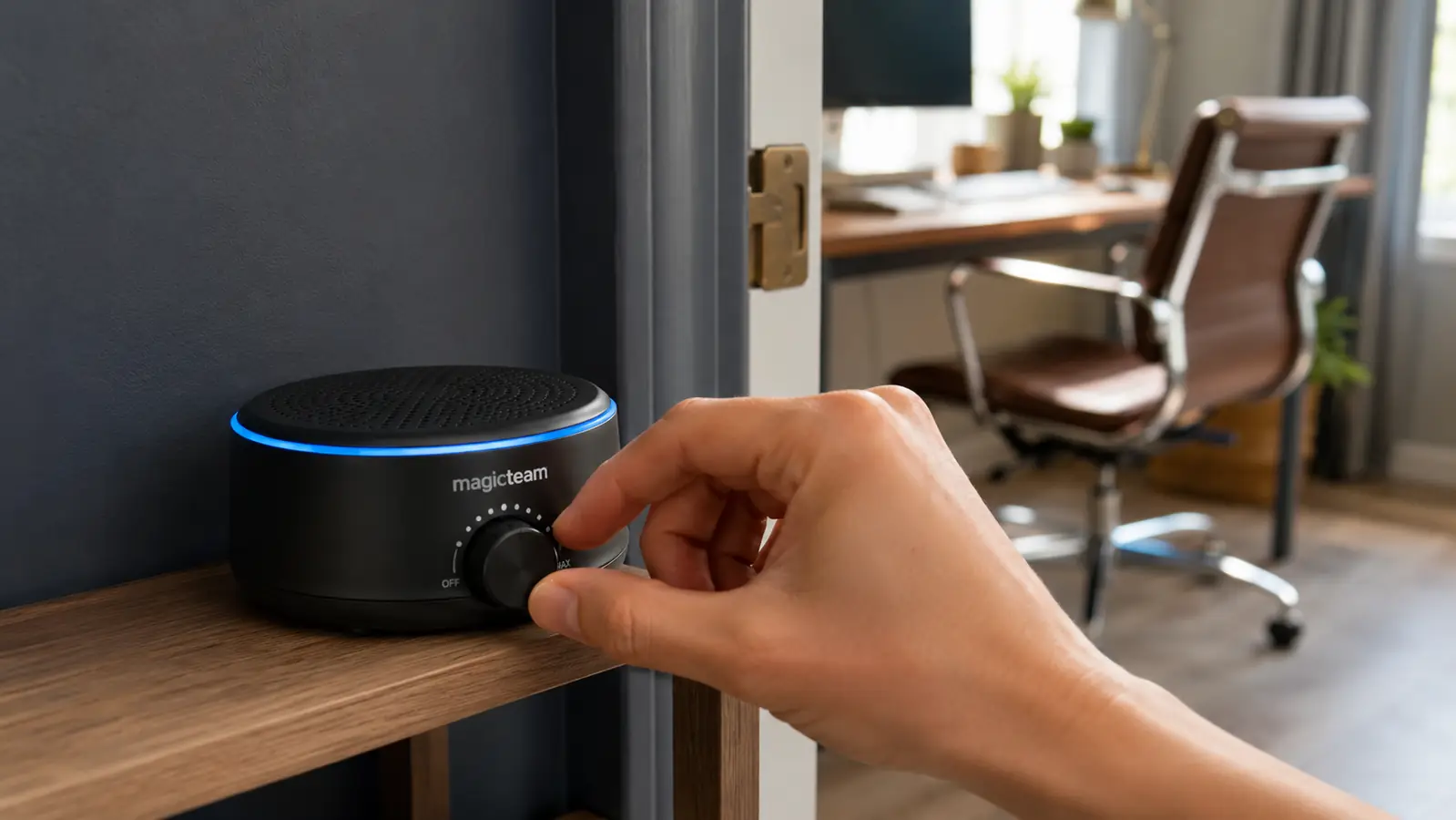
The Magicteam White Noise Machine runs 20 non-looping sounds across 32 volume levels, remembers your last setting, and runs off AC or USB so it fits anywhere on a desk. It's the cheapest, fastest fix on this list, and it's where step one actually starts.
Amazon Check Today's Price on Amazon →Step 1: Figure Out Whether You're Fighting Sudden Noise or Constant Noise
Before you set anything up, spend one work session just paying attention to what actually pulls your focus. Most household noise falls into two very different buckets, and mixing them up is the reason a lot of people buy the wrong fix first. Sudden noise is the sharp stuff, a bark, a door slam, a kid yelling from another room, a package thumping onto the porch. Constant noise is the low hum underneath everything, a dishwasher running its cycle, traffic outside a window, an HVAC system kicking on.
These two types respond to different fixes. Constant noise is the easiest thing for a masking sound to cover, since a steady white noise or fan sound sits at the same frequency range and just blends the hum into the background until your brain stops flagging it. Sudden noise is harder to fully erase, but it can still be softened enough that it stops being a jarring spike, which is usually enough to keep it off a recorded call and out of your train of thought.
Write down, honestly, what actually interrupts you most during a normal week. If it's the same two or three things (the dog, the dishwasher, a sibling's video game volume) you're dealing with a specific, fixable problem, not a vague sense that your house is loud. Knowing the actual source tells you where to place your gear and how loud to run it, instead of guessing. If you genuinely can't pin down a pattern because the noise feels random, keep the list going for a second day before you buy anything. Most "random" households turn out to have three or four repeat offenders once you actually track it.
Step 2: Put the Machine Between You and the Noise, Not Just Near You
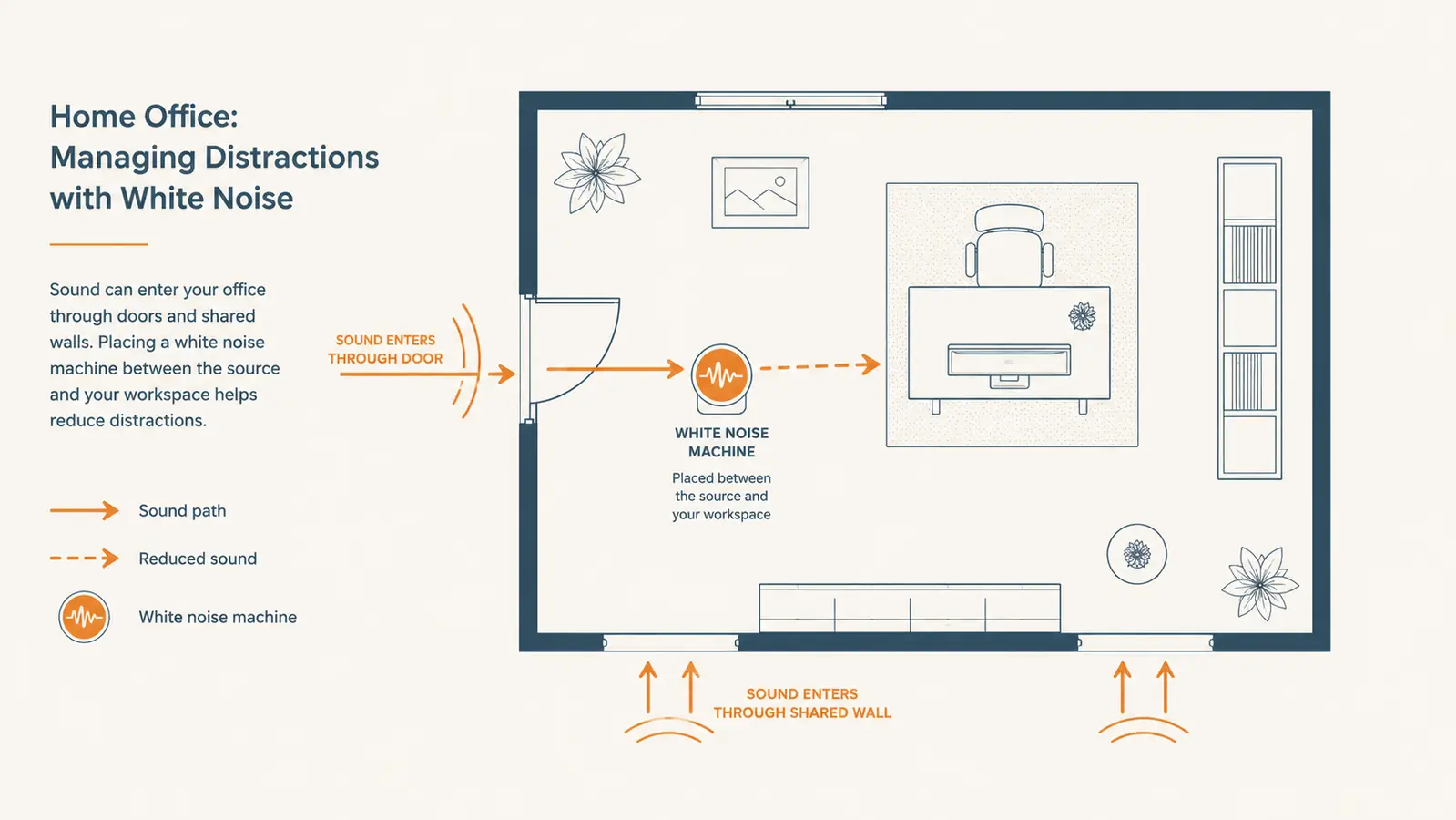
Placement matters more than volume. A white noise machine sitting right next to your keyboard, pointed at your face, has to run louder to mask a noise coming from across the room than the same machine placed closer to the actual source. If most of your noise comes through a doorway, a shared wall, or a hallway, set the machine on a shelf or the floor near that entry point instead of on your desk. You're trying to intercept the sound before it crosses the room, not add a second sound on top of it once it's already arrived.
For a desk setup, a corner near the door or the wall you share with the noisiest part of the house is usually the right spot. If the noise comes from more than one direction, pick the loudest and most frequent source and treat that one first. Trying to cover every possible angle with one small device just spreads the coverage thin and forces you to run it louder than you'd otherwise need to. Standing near your usual work spot and clapping once from a few different points around the room is a quick, low-effort way to hear which direction carries sound the fastest into your space.
The Magicteam unit's USB and AC power options make this easier than it sounds, since you're not locked into whatever outlet happens to be closest to your monitor. Run it off a USB power bank or a nearby outlet strip and you can actually place it where the physics call for it, rather than where the cord reaches. A few feet of relocation can be the difference between running the machine at level 10 and needing level 22 to get the same result.
Step 3: Match the Sound to the Job, Then Dial the Volume In Once
Not every masking sound does the same job. Flat white noise covers a broad range of frequencies evenly, which makes it the most reliable option for masking speech, footsteps, and general household chatter. Rain and ocean sounds have more texture to them, which some people find more pleasant for background listening, but that same texture means your ear can track a rhythm in it, so it's slightly less effective at burying sudden sharp noises like a bark or a slammed cabinet. If your main problem is speech and impulsive noise, start with plain white noise and only switch if it genuinely bothers you.
Volume is a one-time calibration, not something to fiddle with every day. Sit at your desk during a normal noisy stretch of the house (dinner prep, kids home from school, whatever your actual peak hour is) and dial the machine up until the household noise stops registering as a distraction, not until it disappears completely. That's usually a lower setting than people expect. Once you find it, the Magicteam's memory function saves that exact sound and level, so you're not redialing it from scratch every morning.
Test this on an actual call, not just while you're alone at your desk. Have someone in your house make a normal amount of noise while you record a short voice memo with the machine running at your chosen level. Play it back. If the masking sound is loud enough to bother the person listening to the recording, back it down a few notches. The goal is coverage on your end, not a wall of static on theirs.
Step 4: Build a Household Signal So People Know When You're Live
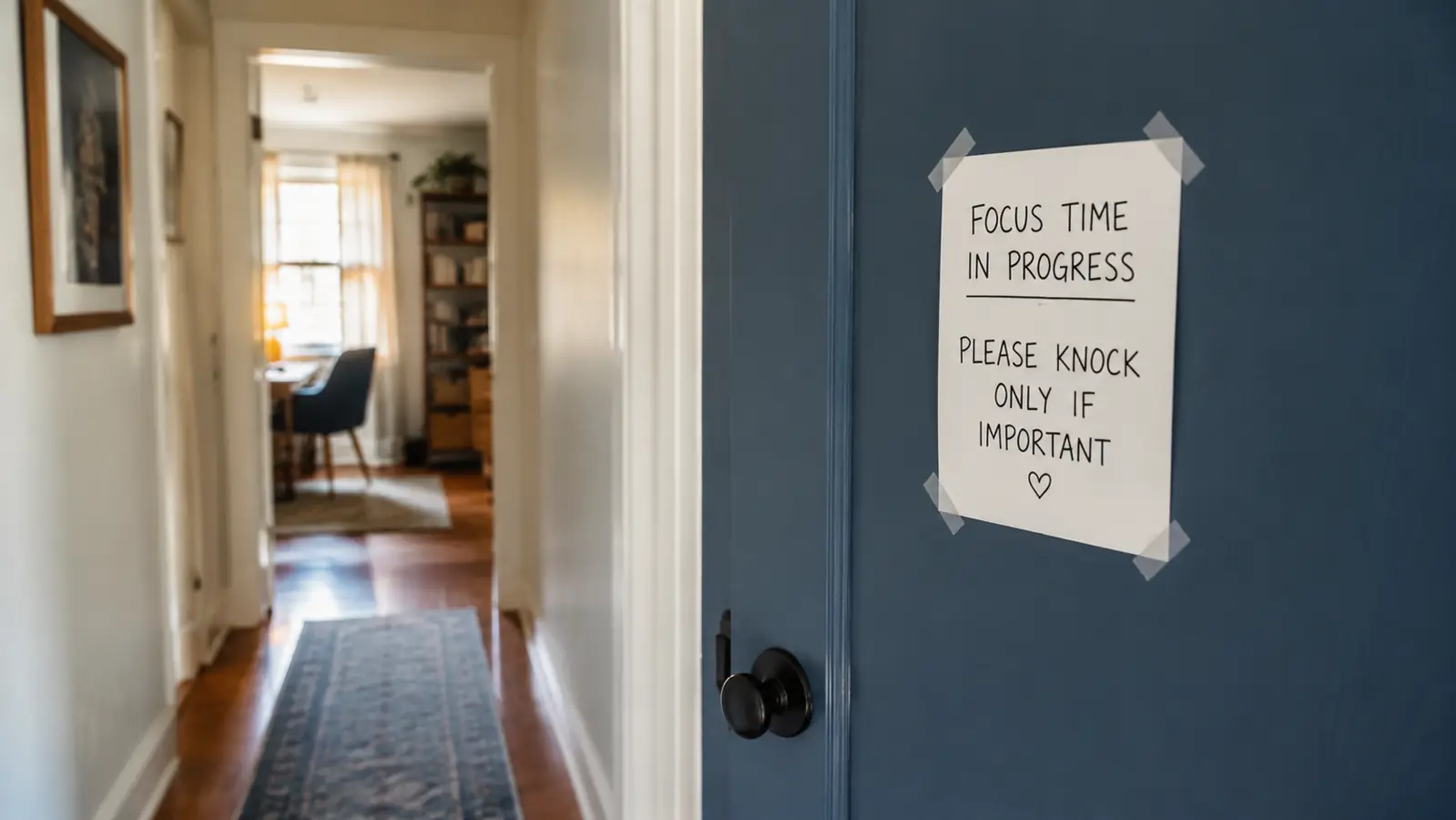
A machine solves the noise you can't control. It does nothing for the noise your household could have avoided if they'd known you were mid-call. A closed door, a small sign taped at eye level, or a group text at the start of your shift heads off a chunk of the avoidable interruptions before they happen, and it costs nothing beyond the thirty seconds it takes to send the text.
Agree on one clear signal with whoever else is in the house, rather than hoping everyone remembers your schedule from memory. A closed door meaning "don't knock unless it's urgent" is simple enough for kids to actually follow, and it removes the guesswork that leads to a mid-sentence interruption during a client call. If you've got a partner on a different work schedule, this cuts both ways, since they deserve the same heads-up when they're the one on a call.
It's also worth mapping your household's predictable noise windows and working around them when your calendar allows it. If the dishwasher always runs at a certain hour or the dog walker shows up like clockwork at noon, block those windows out as internal-meeting-only time when you have the flexibility, and save your genuinely quiet hours for the calls where background noise would actually cost you something. This one habit alone removes a surprising number of the "how was I supposed to know" interruptions that gear can't fully solve on its own.
Step 5: Close the Physical Gaps Sound Is Still Getting Through
A masking sound covers noise once it's in the room with you. It does nothing to stop noise from getting louder than it needs to be in the first place, and a few cheap physical fixes cut down how much work the machine has to do. A door sweep closes the gap at the bottom of a hollow-core door, which is one of the biggest, most overlooked leaks in a typical home office. Weatherstripping around the door frame handles the thinner gaps that let sharp, high-pitched sound through even when the door looks fully shut.
Soft surfaces matter too, though for a different reason than blocking outside noise. A rug on a hard floor and a heavier curtain over a thin window cut down on sound bouncing around inside your own room, which keeps your space from amplifying whatever does get through the door. None of these fixes need to be expensive or permanent. A rug you already own, a $10 door sweep, and a curtain from a closet you're not using elsewhere in the house can close most of the obvious gaps in an afternoon.
Do these in order of cost and effort, not the other way around. Sealing an obvious gap under a door is nearly free and takes fifteen minutes. A white noise machine is the next step up and does the most work per dollar spent on this whole list. Save anything bigger, rearranging furniture, mounting wall treatments, for after you've actually tested the first two steps on a real call and found out where the remaining gaps are.
What Else Helps
If your house is loud enough that masking and a closed door still aren't cutting it, a couple of add-ons compound the effect. If your own voice sounds hollow or distant on calls, that's a different problem than incoming noise, it means sound is bouncing around inside your room, and acoustic panels on the wall behind your desk fix that directly rather than masking anything. If background noise is still slipping through even with the machine running, a decent pair of active noise cancelling headphones handles the last stretch between your ears and whatever's still audible in the room, especially for the sharp, sudden noises a masking sound can't fully erase.
None of these fixes replace each other. They stack. A white noise machine near the door handles noise from other rooms, panels handle your own room's echo, and headphones handle whatever's left once you're actually on a call. Most people don't need all three on day one. Diagnose what's actually bothering you first, using the honest list from step one, and add the next layer only once you've confirmed the current setup still has a gap.
You're not trying to make your house silent. You're trying to make it stop mattering by the time it reaches your call, and that's a much easier problem to solve.
Your house isn't going to get quieter on its own
A dog, a dishwasher, a full household during business hours, none of it stops just because you're on a call. The Magicteam White Noise Machine masks it before it becomes your problem, runs on AC or USB, and remembers your settings so it's ready the second you sit down.
Amazon Check Today's Price on Amazon →